Best Running Shoes for Flat Feet in 2026
Disclosure: Shoe Like may earn a commission when you buy through links on this page. This does not affect our recommendations. This guide currently contains no live prices, stock claims, ratings, or affiliate checkout links.
The best running shoes for flat feet balance comfortable support with a smooth running feel. Start with a stable platform, secure heel, correct width, and arch contact that does not feel aggressive. Flat feet do not automatically require the strongest stability shoe.
Quick answer: Brooks Adrenaline GTS 25 is the balanced guidance option; ASICS GEL-KAYANO 33 is the plush premium stability choice; New Balance 860v15 combines daily support with useful width configurations; HOKA Gaviota 6 is the max-cushion stability option; Saucony Guide 19 provides a smoother moderate-support lane; ASICS GT-2000 14 is the versatile, less bulky alternative.
Evidence note: Shoe Like has not conducted lab or mileage testing on these shoes. The shortlist uses current official manufacturer pages checked September 3, 2026, plus conservative fit and foot-health guidance. It does not claim that a shoe will treat pain or correct a medical condition.
Best Running Shoes for Flat Feet by Use Case
| Use case | Shoe | Why compare it | Watch out for |
|---|---|---|---|
| Balanced daily guidance | Brooks Adrenaline GTS 25 | Current support trainer with GuideRails and wider-width options. | Guidance can feel unnecessary if neutral shoes already feel controlled. |
| Plush premium stability | ASICS GEL-KAYANO 33 | Current KAYANO uses ASICS’ updated FLUIDSUPPORT stability approach. | More structure and cushioning than some runners want. |
| Support plus width | New Balance 860v15 | Current 860 stability line includes wide and extra-wide configurations. | Fit and upper volume still vary by configuration. |
| Max-cushion stability | HOKA Gaviota 6 | Current plush stability model for easy and longer running. | Tall rocker geometry can feel bulky or unfamiliar. |
| Smoother moderate support | Saucony Guide 19 | Current stability daily trainer with wide and extra-wide variants. | May not satisfy runners who prefer firmer, stronger guidance. |
| Versatile stable trainer | ASICS GT-2000 14 | Current stable road trainer with a published wide version. | Less plush than the KAYANO lane. |
How We Chose
We selected current road-running models that occupy different support and cushioning lanes. Every shoe needed an official product or family page, a clear daily-running purpose, and a useful tradeoff. We did not use prices, stock, retailer ratings, or unverified claims about pain relief.
- Stable geometry and secure heel hold mattered more than a large arch bump.
- The list includes both moderate and stronger guidance instead of assuming one support level fits everyone.
- Width and orthotic space were considered separately from stability.
- Each recommendation names a runner who should compare it and a runner who should skip it.
1. Brooks Adrenaline GTS 25
Best for: daily runners who want familiar, balanced guidance without moving to the plushest stability shoe.
Brooks’ current Adrenaline GTS 25 uses the brand’s GuideRails support concept and is available in wider configurations. It is a practical baseline because the shoe sits between a neutral trainer and heavier motion-control options. Try it when your previous experience says guidance feels calmer or more comfortable.
The arch should not feel poked or forced. GuideRails work around the foot’s motion rather than relying only on a hard medial post, but the complete fit still depends on heel shape, width, and lacing. Compare it with a stable neutral shoe if you are unsure whether you need support.
Skip it if: neutral daily trainers already feel steady or you want maximum cushioning.
2. ASICS GEL-KAYANO 33
Best for: runners who want plush cushioning and a more substantial stability platform for easy or longer miles.
ASICS identifies the GEL-KAYANO 33 as a current support-and-comfort model and describes FLUIDSUPPORT as the updated stability system. That makes it the premium, highly cushioned lane in this comparison. It is most sensible for runners who enjoy a built-up shoe and want guidance without an old-style hard post.
More shoe is not always more comfortable. If the platform feels bulky, the rocker interrupts your stride, or the arch contact is too present, the lighter GT-2000 or Guide lane may be easier to run in.
Skip it if: you prefer a lower, simpler daily trainer or dislike a plush structured ride.
3. New Balance Fresh Foam X 860v15
Best for: runners who want a conventional daily stability trainer and need useful width choices.
The current 860v15 sits in New Balance’s stability line, and official product URLs show wide and extra-wide configurations. That matters when low arches and a wider forefoot occur together. A stable shoe that is too narrow can still push the foot over the midsole edge and undermine the reason you chose it.
Fit the correct length first, then compare width. Check whether the upper has enough volume over the midfoot and whether the heel remains secure. The 860 is not automatically the softest option, which can be an advantage if very soft foam feels unstable.
Skip it if: you want a low-support neutral trainer or the heel becomes loose in the width you need.
4. HOKA Gaviota 6
Best for: easy and longer runs when plush cushioning and a broad stable platform are the priority.
HOKA’s current Gaviota 6 is positioned as a plush stability road shoe. It gives this shortlist a max-cushion option without assuming that every flat-foot runner should choose a firm, traditional support shoe. The platform should feel centered at your normal pace, not merely soft while standing still.
Rocker geometry and stack height are personal. Walk, jog, turn, and use a gentle incline before deciding. If you feel perched, unstable, or disconnected from the ground, choose a lower or less cushioned stability model.
Skip it if: tall rocker shoes feel awkward or you want a lighter workout option.
5. Saucony Guide 19
Best for: runners who want daily stability with a smoother, less intrusive support feel.
Saucony currently describes Guide 19 as a stability running shoe for supported daily miles. Official wide and extra-wide product pages make it especially useful for runners who need guidance and fit options together. It fills the middle ground between a neutral shoe and the most substantial stability models.
The tradeoff is support strength. Some runners will find its guidance natural; others who have a long history in firmer stability shoes may want more structure. Comfort during an actual jog should decide, not the category label.
Skip it if: you prefer very firm guidance or need maximum cushioning.
6. ASICS GT-2000 14
Best for: runners who want a versatile stability trainer that feels less bulky than the KAYANO lane.
ASICS’ current GT-2000 14 product pages include a wide version and describe the model as a stable, energetic trainer. It is a sensible comparison for daily running, moderate mileage, and runners who want guidance without the extra plushness of the KAYANO 33.
The lighter-feeling lane comes with less cushioning volume. If long easy runs leave you wanting more protection, compare the KAYANO or Gaviota. If those feel cumbersome, the GT-2000 may be the cleaner choice.
Skip it if: you want the softest or most protective option in the group.
Stability Shoes vs. Stable Neutral Shoes
Flat feet describe arch shape, not a complete running diagnosis. Some flat-foot runners prefer guidance; others are comfortable in a neutral shoe with a broad platform and secure heel. Start with the least complicated shoe that feels controlled, then add support only when it improves comfort and confidence.
A stability label also does not fix poor sizing. Width, upper volume, heel shape, sock thickness, and lacing can change how stable a shoe feels. Compare two support levels in the same session when possible.
Orthotic Fit Checklist
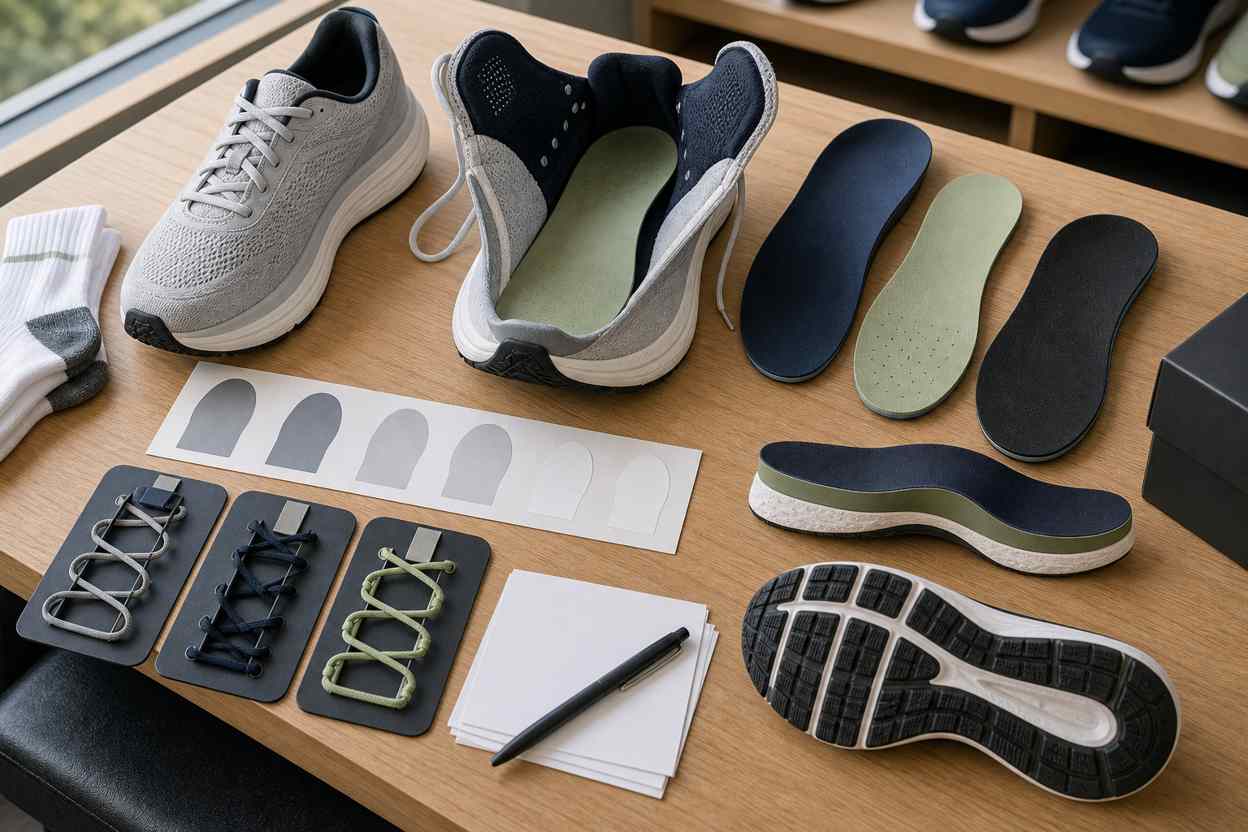
- Remove the stock insole if the orthotic is designed to replace it.
- Check that the heel sits fully down and does not lift after the insert raises the foot.
- Confirm that the upper does not press over the instep.
- Leave enough toe room without adding unnecessary length.
- Jog and turn; the orthotic should not rock inside the shoe or push the foot over the platform edge.
- Use the setup recommended by the clinician or orthotic provider when one is involved.
When a Shoe Guide Is Not Enough
Mayo Clinic notes that flat feet may need no treatment when they are painless. Shoes or arch supports may help symptoms for some people, but they do not cure flat feet. New or worsening pain, swelling, numbness, rigid flat feet, or a sudden change in one foot should be assessed by a qualified clinician before you rely on a product recommendation.
Alternatives to Consider
If every stability model feels intrusive, compare a stable neutral daily trainer with a broad base and secure heel. Orthotic users can also consider a neutral or mild-stability shoe with enough internal depth. When width is the main source of pressure, solve that fit problem before adding more guidance.
Final Recommendation
Start by trying two levels of support, not six similar shoes. The Adrenaline GTS 25 and GT-2000 14 are practical daily baselines; choose the KAYANO 33 or Gaviota 6 when plush protection matters more than weight; compare the 860v15 or Guide 19 when width options are central. Keep the model that feels centered and comfortable without a sharp arch bump.
Running shoes can improve comfort and confidence, but they are not treatment. Persistent symptoms or a sudden change in one foot belong with a qualified clinician, not a longer product shortlist.
Related Guides
For walking, work, or daily wear, return to flat-feet shoes by activity. If width is the main constraint, compare running shoes for wide feet. You can also use the running-shoes hub, Brooks running guide, ASICS running guide, and New Balance guide.
Sources Checked
- Brooks Adrenaline GTS official family page.
- ASICS GEL-KAYANO 33 official product page.
- New Balance 860v15 official product page.
- HOKA Gaviota 6 official product page.
- Saucony Guide 19 official family page.
- ASICS GT-2000 14 Wide official product page.
- Mayo Clinic flatfeet diagnosis and treatment.
- REI running-shoe fit guide.
Official sources were checked September 3, 2026. Model, width, color, size, and regional availability can change; this page does not claim live stock.
FAQ
Are stability shoes always best for flat feet?
No. Some runners with flat feet are comfortable in stable neutral shoes. Compare support levels by comfort, heel hold, platform control, and your prior fitting or clinical guidance.
What is the best running shoe for flat feet and wide feet?
New Balance 860v15, Saucony Guide 19, and ASICS GT-2000 14 have current wide configurations worth comparing. Width availability varies by size and region, so check the exact product page.
Can flat feet cause running pain?
Flat feet can be painless, but some people have symptoms. New or worsening pain, swelling, numbness, a rigid foot, or a sudden one-sided change should be assessed by a qualified clinician.
Should flat-foot runners use orthotics?
Not everyone needs orthotics. If you already use one, choose a shoe with a removable insole, enough depth, secure heel hold, and a platform that remains stable with the insert installed.
How should arch support feel in a running shoe?
Arch contact should feel comfortable and steady, not sharp, forced, or painful. A shoe can provide stability through geometry and heel control without a large arch bump.