Best Shoes for Flat Feet in 2026: Running, Walking & Work
Disclosure: Shoe Like may earn a commission when you buy through links on this page. This does not affect our recommendations. This guide currently contains no live prices, stock claims, ratings, or affiliate checkout links.
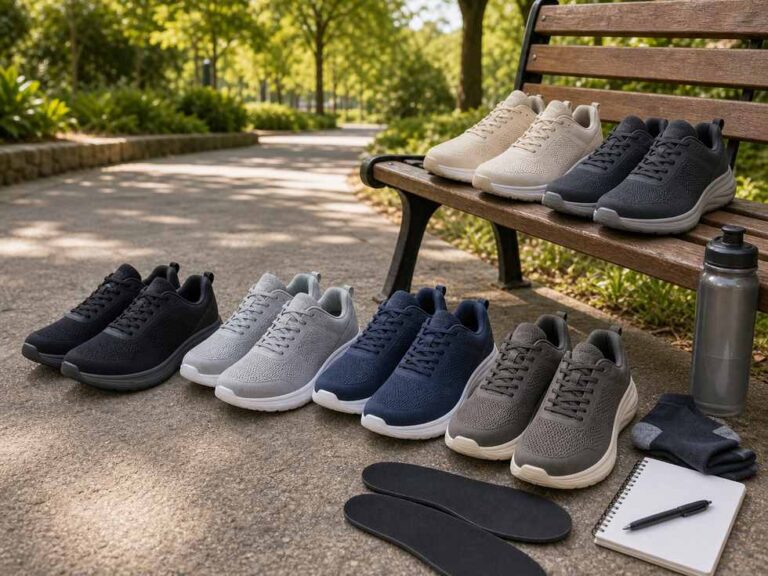
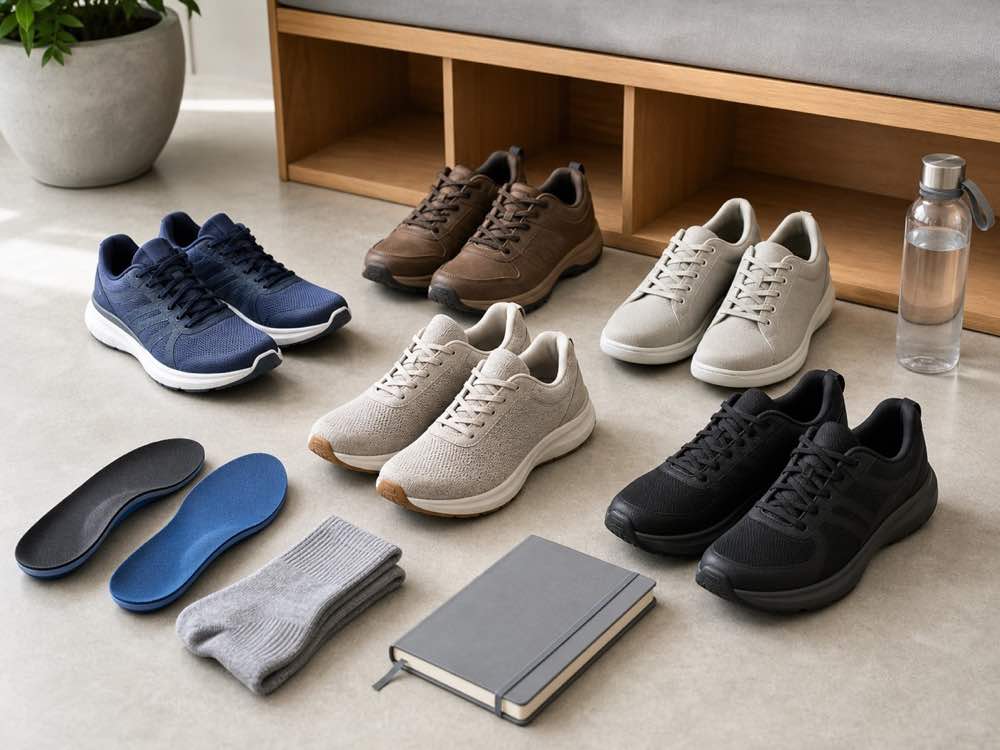
The best shoes for flat feet depend first on the activity. Running needs impact protection and a smooth transition; walking and standing need steady cushioning; gym work needs lateral control; orthotics need enough internal volume. Choose the route before choosing the brand.
Quick answer: Use the dedicated running guide for running shoes, a walking guide for daily steps, a standing-all-day guide for work shifts, and a training guide for the gym. Across categories, look for comfortable arch contact, a secure heel, a stable platform, and enough width. The strongest arch bump is not automatically the best choice.
Medical note: Flat feet can be painless. Mayo Clinic notes that treatment is not needed when flat feet cause no pain, and that arch supports may relieve symptoms without curing the condition. New pain, swelling, numbness, a rigid foot, or a sudden one-sided change should be discussed with a qualified clinician.
Choose Shoes for Flat Feet by Activity
| Activity | Start here | Prioritize | Avoid |
|---|---|---|---|
| Running | Running shoes for flat feet | Stable transition, heel hold, comfortable guidance, correct width. | Using the strongest support without comparing comfort. |
| Walking and daily wear | Walking shoes for flat feet | Flexible forefoot, steady cushioning, grip, late-day comfort. | A tall unstable platform that feels wobbly at walking pace. |
| Standing all day | Shoes for flat feet when standing all day | Stable cushioning, workplace outsole, upper volume, fatigue control. | Choosing a soft running shoe without checking standing stability. |
| Gym and training | Training shoes for low arches | Broad base, heel security, lateral containment, task-specific cushioning. | Using a soft high-stack running shoe for lifting or side-to-side work. |
| Wide feet and low arches | Wide feet and low arches | True width, toe shape, upper volume, platform support. | Adding length when the real problem is width. |
Running: Use the Dedicated Flat-Feet Running Guide
Running deserves its own page because support interacts with pace, impact, cushioning, and fatigue. A shoe that feels steady for errands may be too heavy or stiff for daily miles. A very soft running shoe may feel pleasant during a try-on but less controlled later in the run.
Go to best running shoes for flat feet for the current model comparison. That page covers Brooks Adrenaline GTS 25, ASICS GEL-KAYANO 33, New Balance 860v15, HOKA Gaviota 6, Saucony Guide 19, and ASICS GT-2000 14. This general guide will not repeat those product rankings.
Walking and Everyday Wear
For errands, commuting, and daily steps, start with how the shoe behaves at walking speed. The heel should stay seated, the forefoot should bend without twisting the whole platform, and cushioning should feel stable when you slow down, turn, or stand at a counter.
Low arches do not automatically require a rigid motion-control shoe. A stable neutral walking shoe can work when the arch contact is comfortable and the platform does not tip inward. If a pronounced arch bump creates pressure or numbness, move on; a break-in period should not be painful.
Standing and Work Shifts
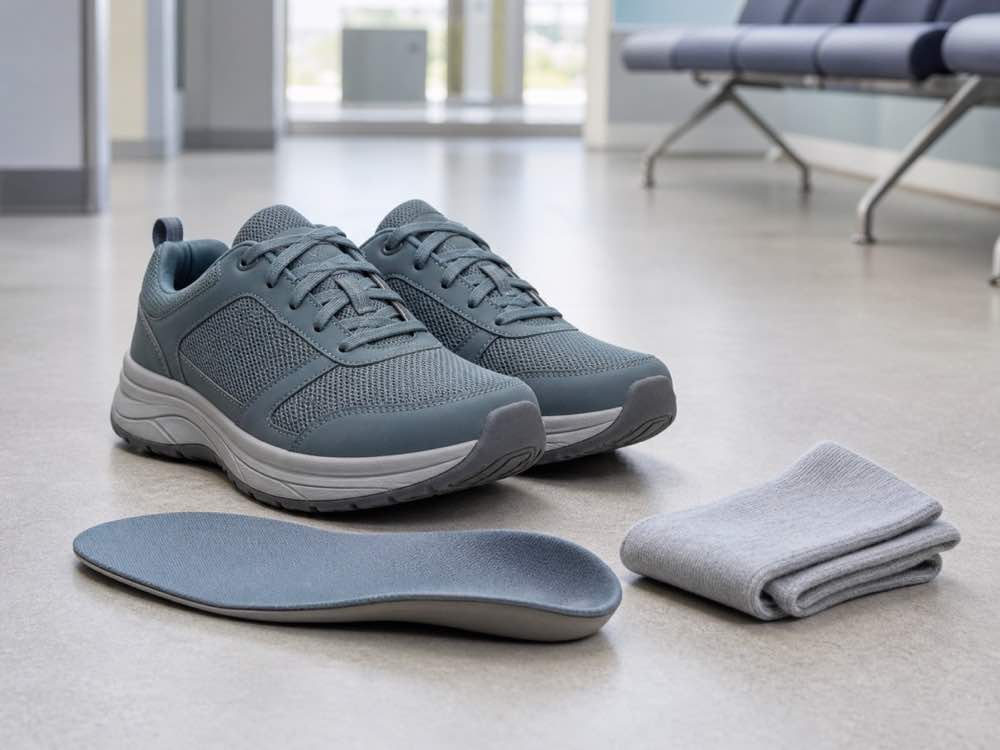
Standing changes the problem. You are not rolling continuously through each step, so very soft foam can feel unstable or tiring. Look for cushioning that stays level, enough room for normal late-day swelling, and an outsole that matches the workplace. Slip resistance, dress rules, or safety requirements outrank a general flat-feet recommendation.
Use the standing-all-day guide to compare work-shift priorities. Healthcare, restaurant, warehouse, retail, and office environments do not all need the same outsole or upper.
Gym and Training
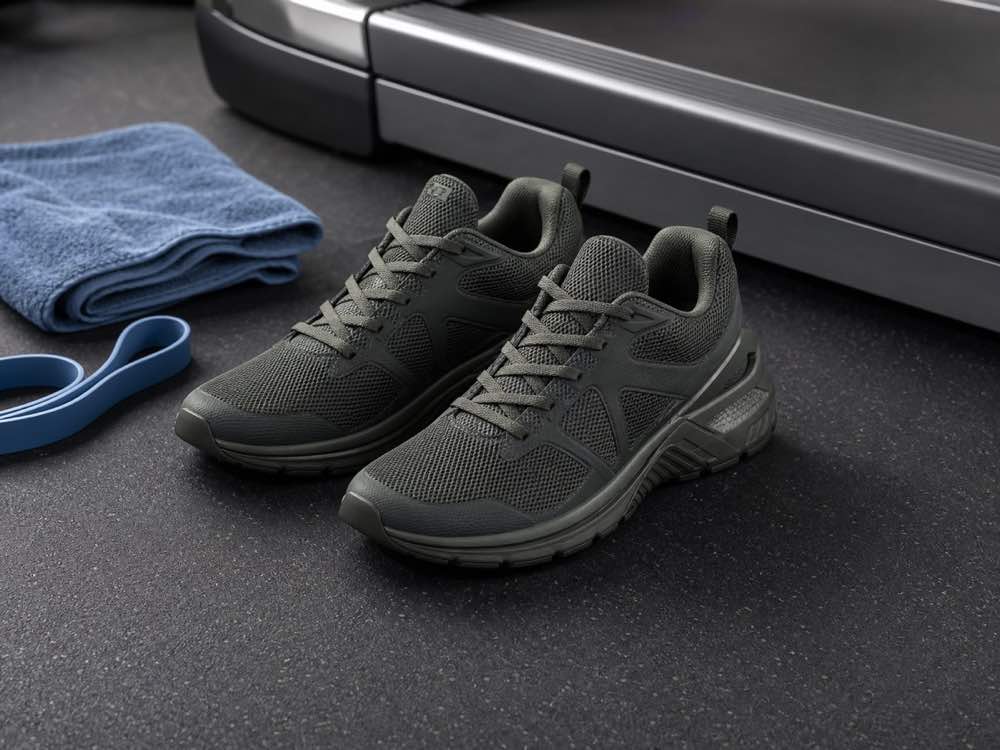
For strength training and lateral movement, platform control matters more than plush running cushioning. The foot should not slide over the midsole during a side step, and the heel should not sink or wobble under load. Treadmill-only sessions can use running shoes, but lifting and court-style drills call for a more stable training base.
Compare the gym-shoe guide and training-shoe guide. Choose the page that matches the movement you do most often.
Orthotics and Removable Insoles
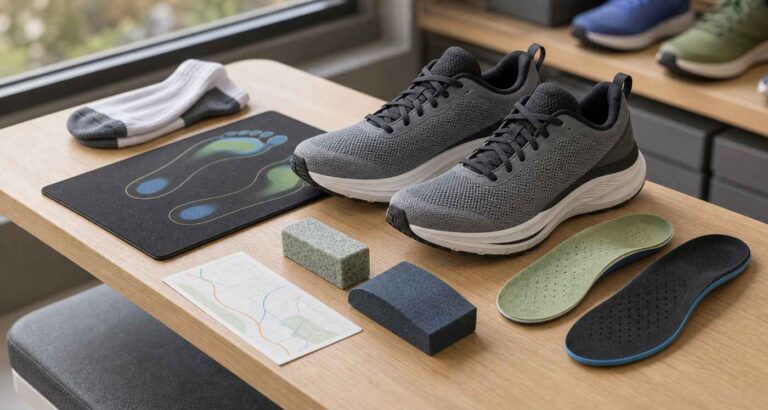
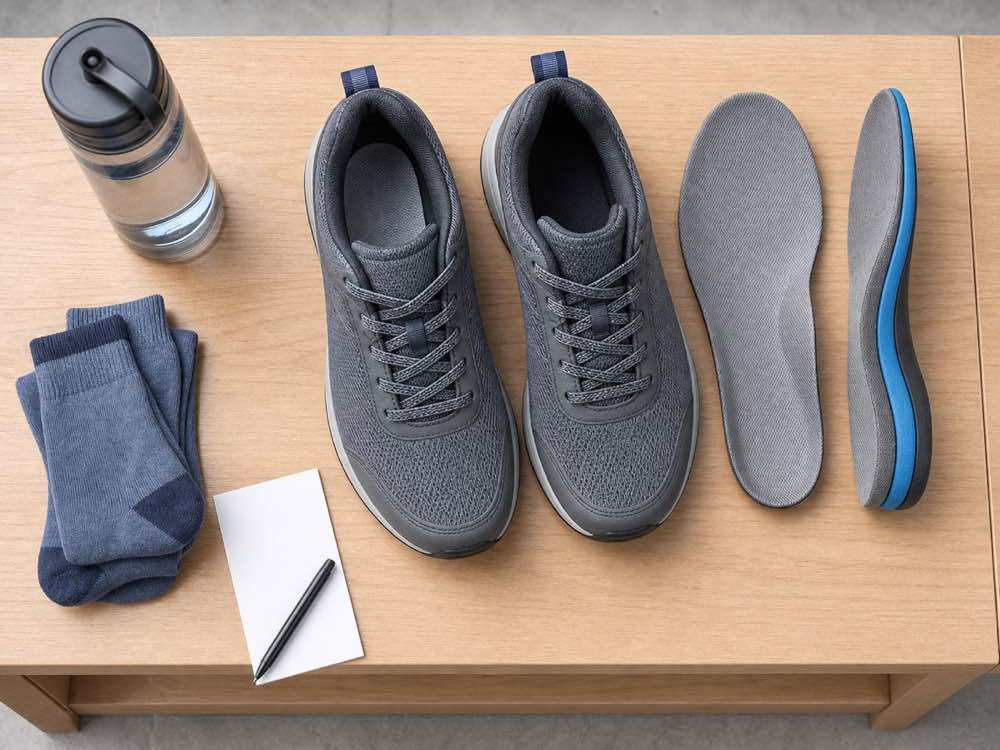
If you already use a custom or over-the-counter orthotic, let the insert do its job. The shoe needs a removable stock insole, enough depth, a secure heel counter, and a stable base. Do not stack a thick orthotic on top of the stock insole unless the manufacturer or clinician specifically directs that setup.
Test the complete combination. An insert can raise the heel, tighten the upper, or push the foot forward. If the shoe becomes shallow or the heel slips, a larger size may add the wrong kind of space; a deeper or differently shaped model is usually the better comparison.
Wide Feet and Low Arches
Width and arch height are separate fit dimensions. A supportive shoe can still be too narrow, while a wide shoe can still feel unstable. If your forefoot spills over the midsole, toes are compressed, or the upper pulls tightly across the foot, compare a labeled wide size before adding length.
Start with shoes for wide feet for the cross-activity width map. Runners should then move to either the wide-running or flat-feet-running guide depending on which problem controls the fit.
A Five-Minute Fit Check
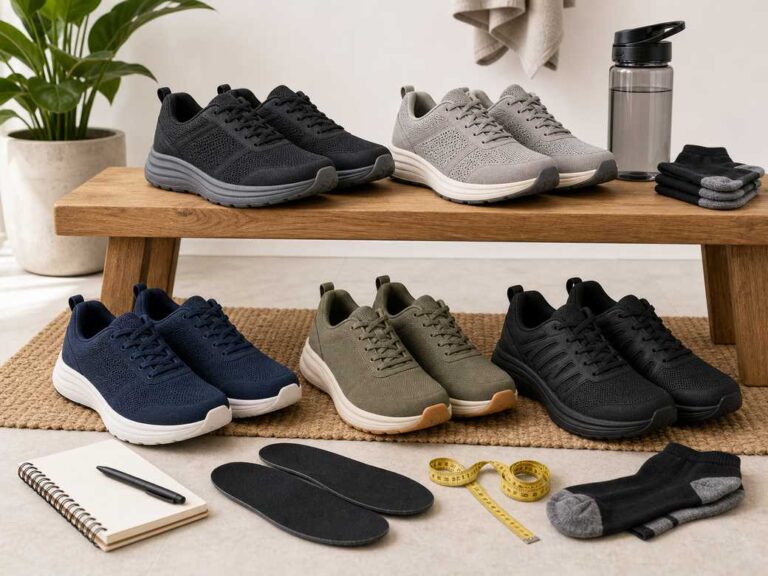
- Use the socks and orthotics you plan to wear.
- Fit the larger foot and confirm that the toes do not hit the front.
- Stand still: arch contact should feel supportive or neutral, not sharp.
- Walk, turn, and step sideways: the heel should stay seated and the platform should feel controlled.
- Check forefoot width and upper volume separately from shoe length.
- Reject persistent pinching, numbness, heel lift, or a feeling that the shoe is forcing your foot into position.
Sources Checked
- Mayo Clinic: Flatfeet diagnosis and treatment.
- Mayo Clinic: Flatfeet symptoms and causes.
- MedlinePlus: Flat feet.
Health references were checked September 3, 2026. This page offers footwear decision support, not diagnosis or treatment.
Related Guides
For running-specific choices, use running shoes for flat feet. For cross-category comparisons, see best running shoes, best walking shoes, best shoes for standing all day, and best shoes for wide feet.
FAQ
What shoes are best for flat feet?
Start with the activity, then look for comfortable arch contact, secure heel hold, stable cushioning, and enough room for your foot or orthotic. The best running option may be a poor gym or work-shift shoe.
Do flat feet always need stability shoes?
No. Flat feet can be painless, and some people are comfortable in stable neutral shoes. Compare support levels by comfort and activity rather than choosing the strongest stability label automatically.
Can shoes cure flat feet?
No. Shoes and arch supports may improve comfort for some people, but they do not cure flat feet. New pain, swelling, numbness, or a sudden one-sided change needs professional assessment.
Are shoes for low arches the same as shoes for flat feet?
The searches overlap, but fit needs vary. Some low arches need only a stable, comfortable shoe; others may need more guidance, width, or room for an orthotic.
Should people with flat feet use orthotics?
Some people benefit from orthotics and others do not need them. If you use an insert, choose a shoe with enough depth, a removable stock insole, secure heel hold, and a stable base.