Best Running Shoes for Wide Feet in 2026
Disclosure: Shoe Like may earn a commission when you buy through links on this page. This does not affect our recommendations. This guide currently contains no live retailer prices, stock claims, ratings, or affiliate checkout links.
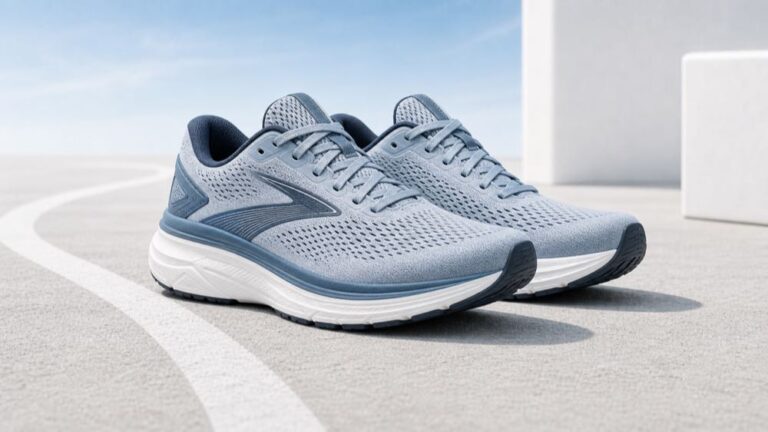
The best running shoes for wide feet give the forefoot enough room without letting the heel or midfoot drift. Start with the job of the shoe: daily miles, long easy runs, support, orthotics, or natural toe splay. Then compare a true wide width with a roomier toe-box shape instead of automatically buying a longer size.
Quick answer: New Balance 1080v15 is the comfort-first daily option; Brooks Ghost Max 4 and HOKA Bondi 9 cover stable high-cushion running; Saucony Echelon 10 is the clearest wide and extra-wide orthotic-friendly comparison; Altra Torin is for runners who prioritize toe shape and low drop; Brooks Adrenaline GTS 25 adds guidance for runners who prefer support. Fit matters more than the ranking.
Evidence note: Shoe Like has not lab-tested these shoes. Recommendations are based on current manufacturer pages checked September 3, 2026, published fit guidance, and the tradeoffs described below. Width availability can change by size, color, and region.
Choose by Run Type and Width Need
| Use case | Starting point | Fit reason | Main tradeoff |
|---|---|---|---|
| Daily and easy running | New Balance 1080v15 | Current daily trainer with multiple fit configurations and a comfort-first role. | Soft cushioning is not the first choice for runners who want a firm, fast feel. |
| Long easy runs or walk-run days | Brooks Ghost Max 4 | Wide options plus a substantial, stable-feeling platform category. | More shoe than some runners want for intervals or quick transitions. |
| Maximum cushioning | HOKA Bondi 9 | Current Bondi line includes wide choices and is positioned for everyday running and walking. | The tall, rolling ride can feel bulky or unfamiliar. |
| Orthotics or more internal room | Saucony Echelon 10 | Official wide and extra-wide versions make it a clear high-volume comparison. | Heavier and less nimble than a lighter daily trainer. |
| Natural toe shape | Altra Torin family | Foot-shaped forefoot approach and wide variants in the Torin line. | Low-drop geometry deserves a gradual transition. |
| Guidance and width | Brooks Adrenaline GTS 25 | Current support-focused daily trainer with wider-width options. | Extra guidance may be unnecessary if neutral shoes already feel stable. |

How We Chose
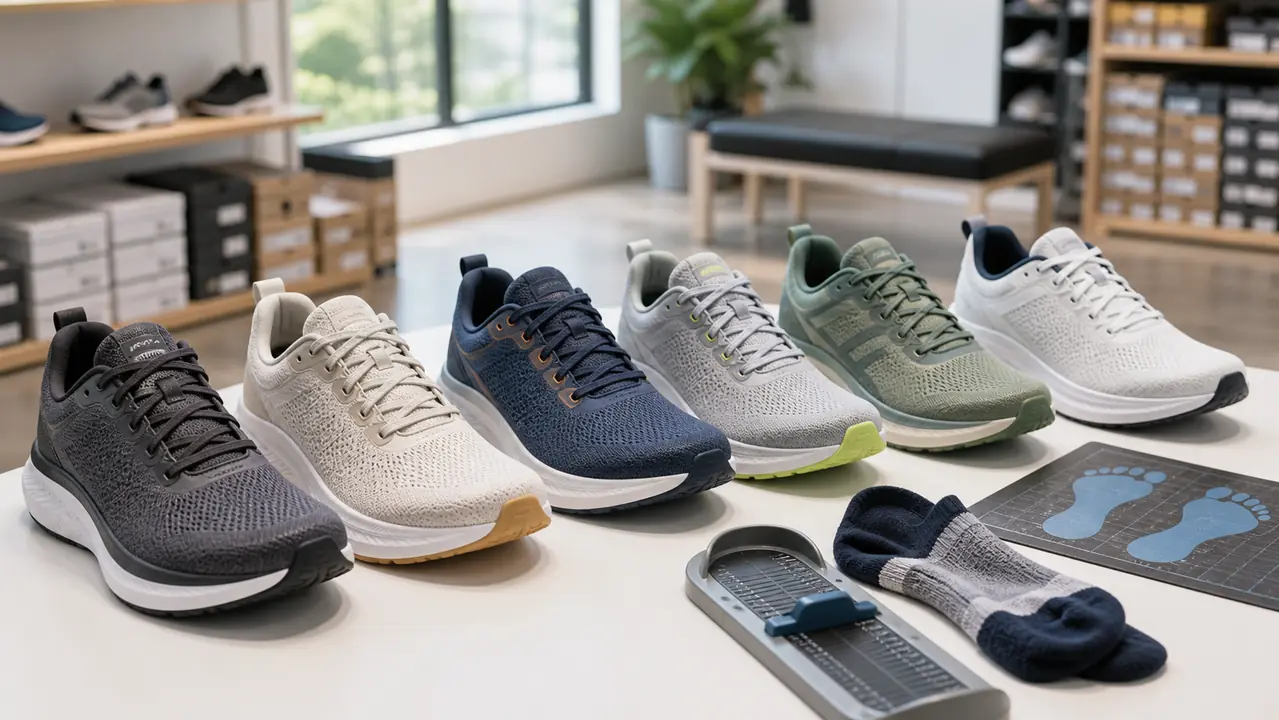
We prioritized shoes that solve a recognizable fit problem without turning width into a single measurement. The shortlist covers labeled wide sizes, toe-box shape, upper volume, heel hold, platform stability, orthotic space, and a clear running use case. We excluded racing claims, live prices, stock, buyer ratings, and any performance result that Shoe Like did not verify.
- A current manufacturer page or current official model-family page was available.
- The shoe fills a distinct use case instead of repeating another soft daily trainer.
- The fit explanation includes at least one reason to buy and one reason to skip.
- Width is treated separately from support, cushioning, and shoe length.
1. New Balance 1080v15
Best for: wide-foot runners who want a soft everyday trainer for easy miles and run-walk use.
The 1080v15 is the easiest first comparison when you want a current neutral daily trainer and need more than one fit configuration. The value is not that it will fit every wide foot. It gives you a realistic chance to compare length and width separately instead of moving up half a size and hoping the heel still holds.
The shoe belongs in the daily and easy-mile lane. Runners who prefer a firmer platform, a lower stack, or a sharper speed-work feel should compare something less comfort-led. Also check upper volume: a labeled wide outsole does not guarantee enough room over a high instep.
Skip it if: you want a traditional stability system or a lightweight workout shoe.
2. Brooks Ghost Max 4
Best for: long easy runs, recovery-paced miles, and runners who mix running with walking.
Brooks now lists the Ghost Max 4 for men and women, including wide choices. Its role in this guide is stable high cushioning rather than aggressive support. A broader-feeling platform can help a roomy shoe feel controlled, but the heel still needs to stay seated when you turn, descend, or pick up the pace.
This is the wrong direction if a tall shoe makes you feel perched or if most of your training is short, fast work. Do not confuse a substantial platform with a corrective stability shoe; choose it for cushioning and fit first.
Skip it if: you want a low-profile, flexible ride or minimal shoe weight.
3. HOKA Bondi 9
Best for: runners who prioritize plush protection for easy running and walking crossover.
HOKA’s current Bondi 9 pages position it as a cushioned everyday road shoe, and the brand’s wide collections include Bondi 9 options. It earns a place here because the wide-foot decision is more than toe room: a tall cushioned shoe also needs a secure heel and a platform that feels predictable at your pace.
The Bondi shape and rocker will not suit everyone. Try it beside another wide daily trainer rather than assuming maximum cushioning is automatically more comfortable. If your foot sits over the edge of the midsole or the heel lifts, move to a different last.
Skip it if: you dislike rocker geometry or want a lighter shoe for faster sessions.
4. Saucony Echelon 10
Best for: wide or extra-wide feet, higher-volume fit needs, and runners who use orthotics.
Saucony currently publishes standard, wide, and extra-wide Echelon 10 product pages. That makes it the clearest option in this shortlist when the problem is full-shoe room rather than toe shape alone. The broad daily-trainer role and removable-insole use case also make it a sensible model to try with an existing orthotic.
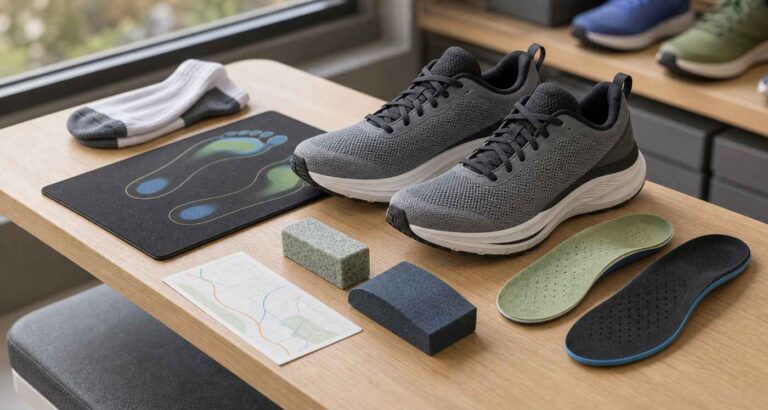
Bring the insert and the socks you actually use. An orthotic can lift the heel, tighten the upper, or reduce toe room even when the shoe is technically wide. The finished combination must feel secure and level.
Skip it if: you want a light, fast workout shoe and do not need the extra volume.
5. Altra Torin Family
Best for: runners whose toes need a straighter, more natural shape while the heel still fits securely.
Altra’s Torin family is useful for separating toe-box shape from conventional wide sizing. Current official pages show the Torin family and wide variants, but not every Torin configuration has the same width. Check the exact men’s or women’s product page before buying.
The bigger decision is geometry. Torin models use a low- or zero-drop approach, which can load the lower leg differently from a higher-drop shoe. Runners moving from conventional shoes should change gradually rather than using a long run as the first test.
Skip it if: you do not want to adapt to low-drop geometry or need stronger traditional guidance.
6. Brooks Adrenaline GTS 25
Best for: wide-foot runners who already know they prefer a guided, support-focused daily trainer.
The current Adrenaline GTS 25 uses Brooks’ GuideRails support concept and is offered in wider-width configurations. It belongs here for runners who need width and prefer guidance, not because wide feet automatically require stability.
Compare it directly with a neutral wide shoe. If both feel equally secure and the neutral shoe is more natural, there is no prize for choosing more support. If the Adrenaline feels calmer and more centered, it is the more sensible daily option.
Skip it if: neutral wide shoes already feel stable or you want maximum cushioning.
Wide Width vs. Wide Toe Box
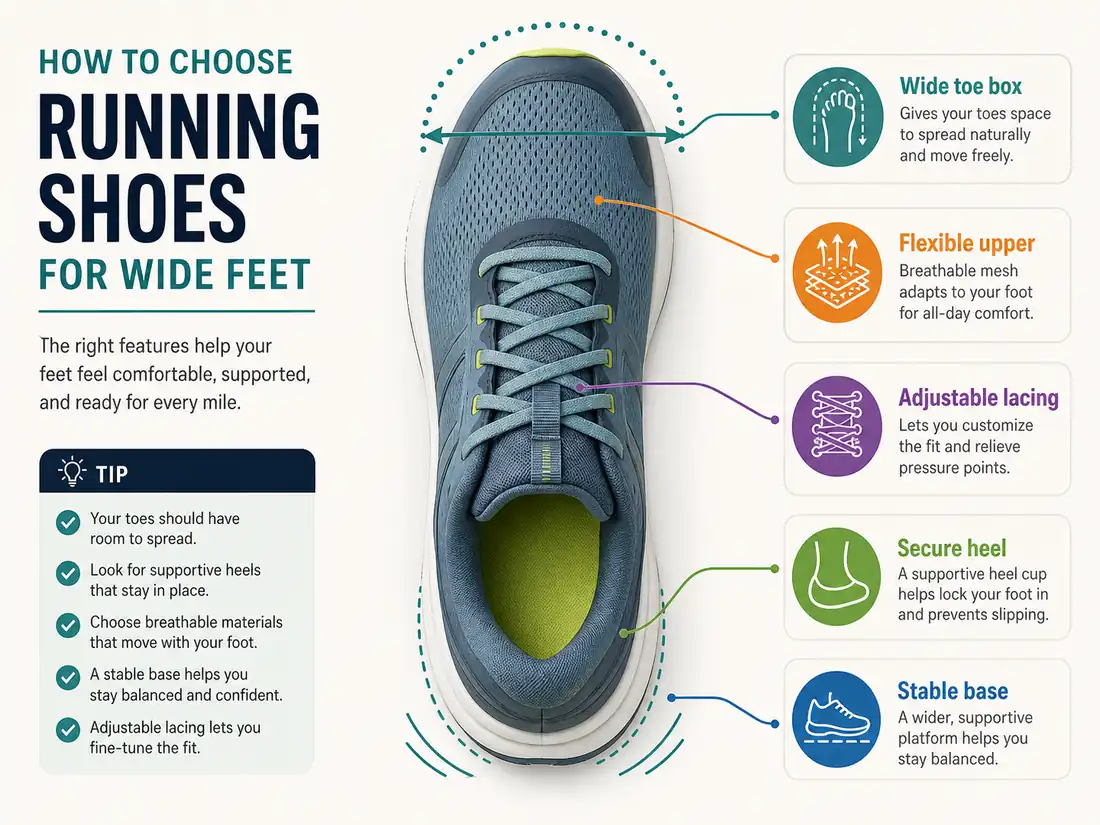
A true wide size usually changes more than the toe area. Depending on the model, it can add platform width, upper volume, or room through the midfoot. A wide toe box mainly changes the shape around the toes. That can be ideal when the forefoot is broad but the heel is narrow.
Use the pressure pattern to decide. Toes squeezed but heel secure: start with a roomier toe shape. Forefoot and midfoot both tight: compare labeled wide or extra-wide sizes. Pressure over the top of the foot: look for more upper volume or a removable insole. Heel slip in every wide shoe: try a different last before adding more width.
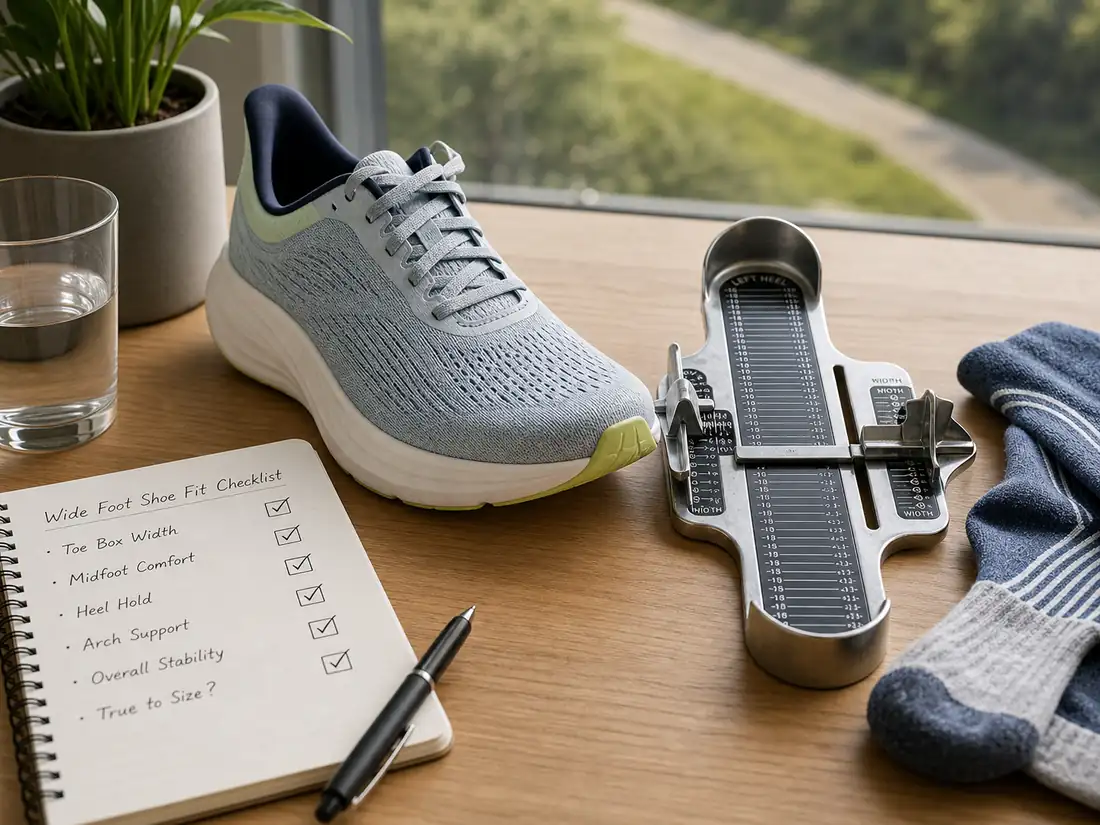
How a Wide Running Shoe Should Fit
- Fit the larger foot and use the socks you run in.
- Check length before width; toes should not hit the front on a downhill step.
- Stand and spread the toes. The upper should not pinch the little toe or pull sharply across the forefoot.
- Walk and jog. The heel should stay seated without crushing the midfoot with the laces.
- Check the midsole edge. Your foot should not visibly spill over the platform.
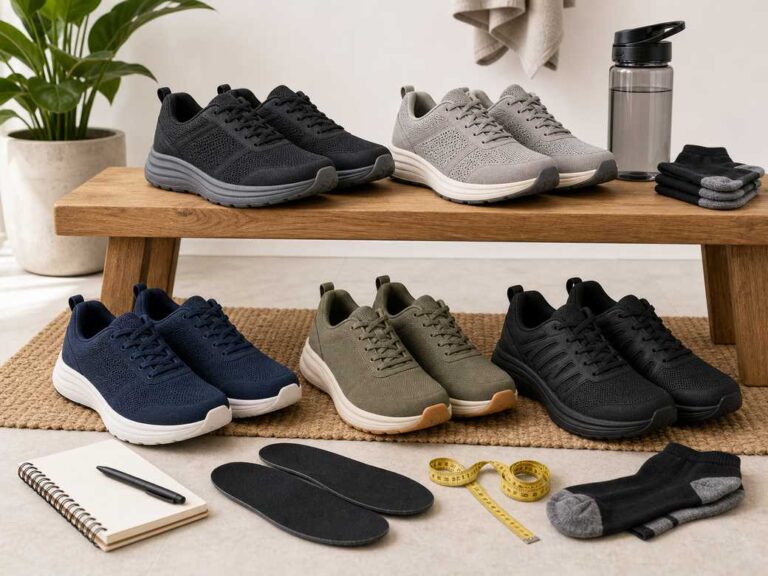
- If heel slip is the only issue, try a runner’s loop before buying a longer or narrower shoe.
REI’s running-shoe fit guidance recommends fitting to the larger foot and notes that heel blisters can also come from a shoe that is too wide; heel-lock lacing is a useful first adjustment. Fit advice is a starting point, not a diagnosis.
Alternatives to Consider
If the width problem appears mainly during walking or late-day swelling, compare a walking-specific shoe instead of buying more running shoe than you need. If the problem is toe shape rather than full-foot width, try a shaped forefoot next to a conventional 2E or 4E option. Runners who use orthotics should compare the complete shoe-and-insert setup, not a shoe by itself.
Final Recommendation
Start with the 1080v15 if you want a soft neutral daily baseline with useful fit choices. Compare the Ghost Max 4 or Bondi 9 when long-run cushioning matters more than speed. Choose the Echelon 10 when extra width or orthotic space controls the decision, and the Adrenaline GTS 25 only when you also prefer guidance. The Torin family is the shape-led alternative for runners willing to adapt to low-drop geometry.
Reject any shoe that fixes toe pressure by creating heel slip, midfoot movement, or platform spillover. The best wide running shoe is the one that gives the right part of your foot more room while keeping the rest of the fit secure.
Related Guides
Use best shoes for wide feet for the cross-activity width map. If most of your mileage is walking, go to walking shoes for wide feet. New runners can compare wide-fit beginner running shoes, while the running-shoes hub covers the broader category.
Sources Checked
- New Balance 1080v15 official product page.
- Brooks Ghost Max 4 official product page.
- HOKA Bondi 9 official product page.
- Saucony Echelon 10 Wide official product page.
- Altra Torin official family page.
- Brooks Adrenaline GTS official family page.
- REI running-shoe fit guide.
Official pages were checked September 3, 2026. Width, color, size, and regional availability can change; this page does not claim live stock.
FAQ
Should wide-foot runners buy a wide size or size up?
Try the correct length in a true wide width first. Sizing up adds length and can create heel slip without solving pressure through the forefoot or midfoot.
What is the difference between a wide shoe and a wide toe box?
A labeled wide shoe usually adds room across more of the platform or upper. A wide toe box mainly changes the shape around the toes, so the midfoot and heel may still fit closely.
Are wide running shoes available for women?
Yes. Several current road-running lines are offered in women’s wide options, but the exact widths can vary by model and color. Check the specific product page rather than assuming every version has the same widths.
Which wide running shoes work with orthotics?
Start with a stable shoe that has enough internal depth and a removable stock insole. The Saucony Echelon 10 is a useful comparison because official wide and extra-wide versions are available, but always test the shoe with your own insert.
Do wide feet automatically need stability shoes?
No. Width and stability are different decisions. Choose a stability shoe only when you prefer added guidance or have previous professional or fitting experience that points you that way.