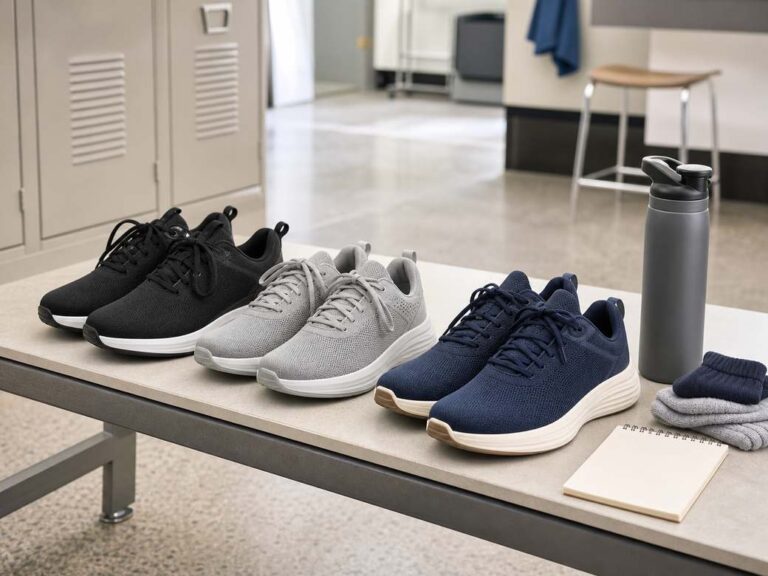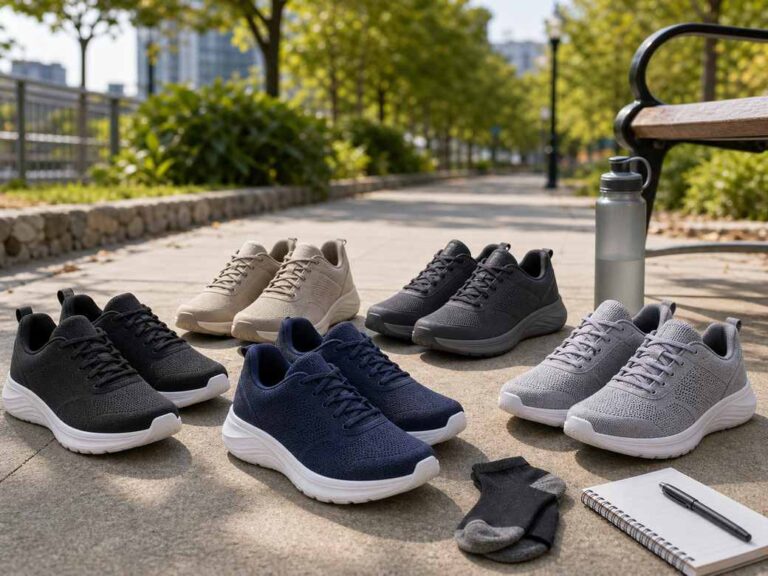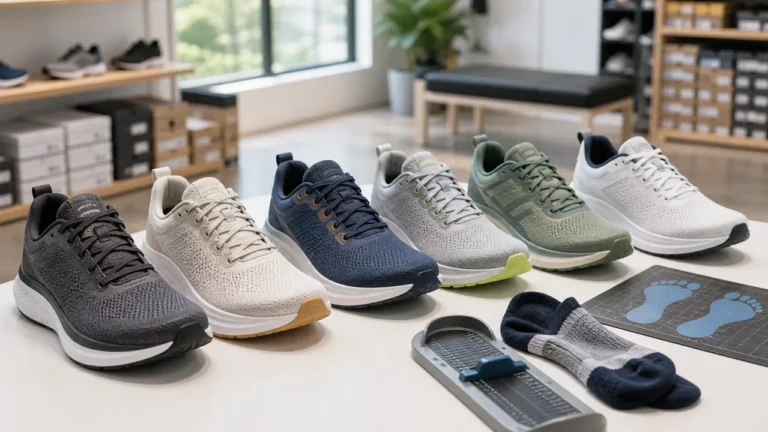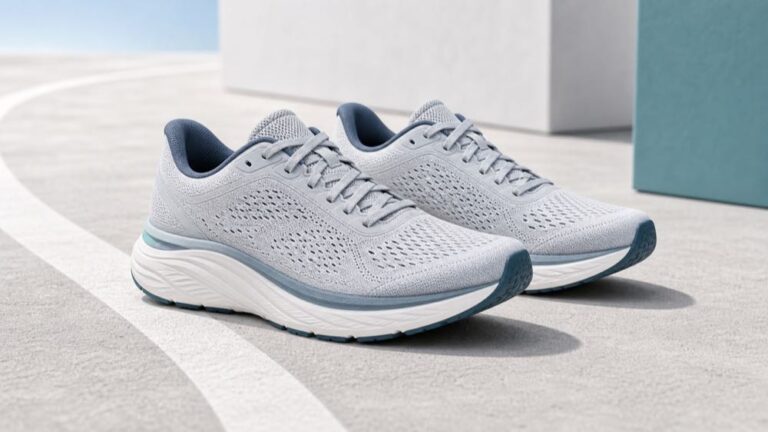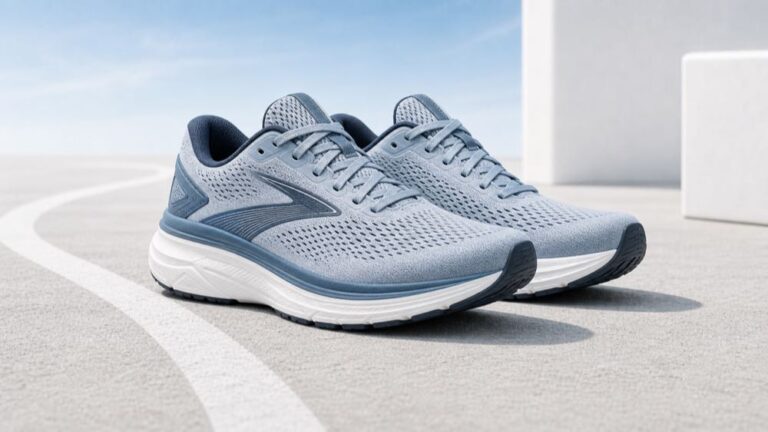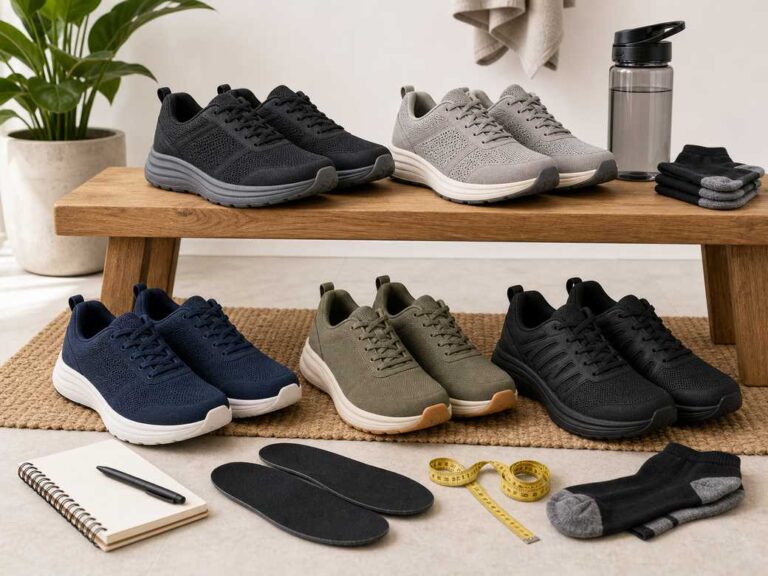
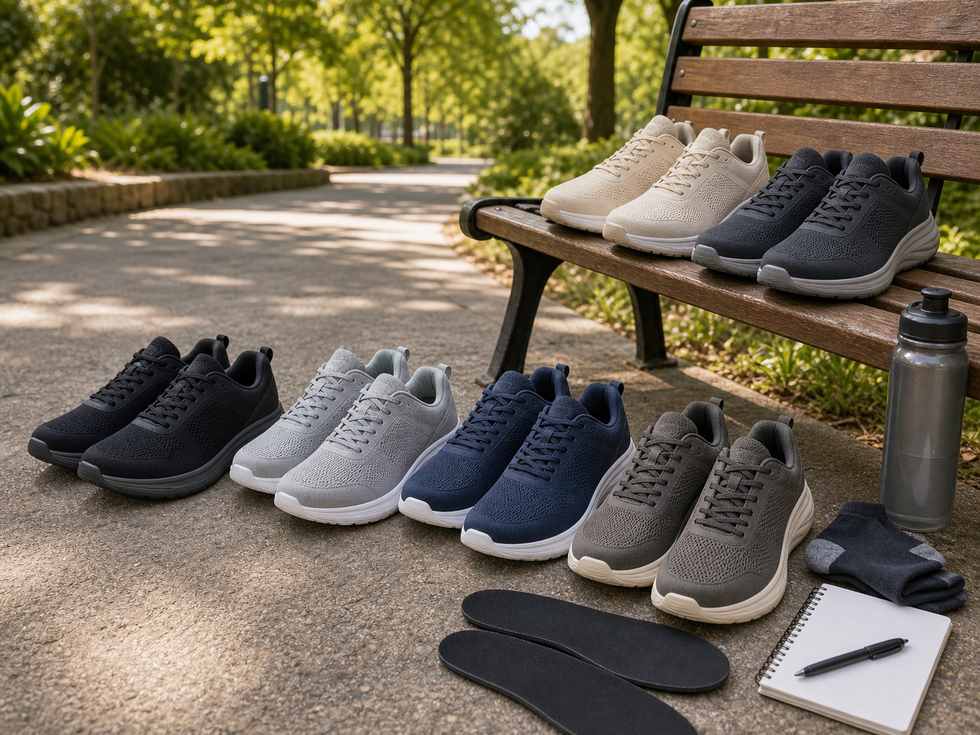
Best Walking Shoes for Wide Feet in 2026
Disclosure: Shoe Like may earn a commission when you buy through links on this page. This does not affect our recommendations. We do not show live prices, discounts, stock status, ratings, or retailer availability unless we have verified them.
How this guide was updated: This is a research-based buying guide, not a hands-on wear test. On August 23, 2026, we rechecked current manufacturer pages and replaced broad brand-family suggestions with exact models whose published width, walking, cushioning, or fit details can be compared.
The best walking shoes for wide feet do more than add length. Wide-foot comfort comes from the right toe-box shape, enough forefoot volume, secure heel hold, stable cushioning, and a return policy that lets you test the shoe with your real socks and insoles. A shoe that is longer but still narrow can create heel slip, toe pressure, and sidewall spillover.
Short answer: start with the New Balance 1080v15 if the widest published size range is your main filter. Compare the Brooks Ghost Max 4 for a broad-base walking crossover, the women’s Skechers GO WALK Arch Fit 2.0 Cassy for a lighter casual wide option, the HOKA Bondi 9 Wide for plush pavement cushioning, the ASICS GEL-NIMBUS 28 WIDE for a current max-cushion wide trainer, and the men’s Orthofeet Edgewater when extra depth and widths through 6E matter.
Quick Picks
| Pick | Best for | Why it fits wide feet | Watch out for |
|---|---|---|---|
| New Balance 1080v15 | Most width choices | Current men’s variants list B, D, 2E and 4E; women’s variants list 2A, B, D and 2E. | Extra-soft foam still needs a centered, stable feel at walking pace. |
| Brooks Ghost Max 4 | Broad-base walking crossover | Brooks lists walking and orthotics use plus medium, wide and extra-wide options. | Its rocker should feel natural during slow walking, stops and turns. |
| Skechers GO WALK Arch Fit 2.0 Cassy | Women’s casual wide option | The current page lists medium and wide, removable Arch Fit insole, mesh upper and traction outsole. | Wide is the broadest listed option; it is not an extra-wide pick. |
| HOKA Bondi 9 Wide | Plush pavement cushion | A wide configuration of HOKA’s current walking-capable Bondi 9 with a broad, highly cushioned platform. | Tall cushioning can feel unstable to some walkers on curbs or slopes. |
| ASICS GEL-NIMBUS 28 WIDE | Wide max-cushion trainer | The current wide version uses FF BLAST PLUS, PureGEL and an engineered knit upper. | The 8 mm neutral platform is not a substitute for motion-control advice. |
| Orthofeet Edgewater | Men’s 2E-to-6E depth | The current page lists D, 2E, 4E and 6E plus stretch upper, extra depth and fit spacers. | Comfort features do not replace clinical care for persistent symptoms. |
Choose by Width Need and Walking Surface
| Need or surface | Start with | Why | Fit test |
|---|---|---|---|
| Men’s 4E or women’s 2E | 1080v15 | The current product family publishes four width choices for each gender. | Change width before adding length; confirm heel hold. |
| Men’s 6E or extra depth | Orthofeet Edgewater | Its current men’s page lists widths through 6E, a stretch upper and extra depth. | Use the included spacers only to fine-tune volume, not to hide a wrong length. |
| Long pavement walks | Ghost Max 4, Bondi 9 Wide or GEL-NIMBUS 28 WIDE | These are cushioned running-walking crossover options with wide configurations. | Walk slowly, stop and turn; reject sidewall spillover or wobble. |
| Wet sidewalks or workplace floors | The model with suitable verified outsole requirements | Width alone does not prove wet-surface or workplace grip. | Check the exact outsole and any employer-required slip standard before buying. |
| Casual errands in a women’s wide | GO WALK Arch Fit 2.0 Cassy | It is a current light walking model with a published wide option. | Test the fixed stretch-lace heel hold; wide is not extra wide. |
1. New Balance 1080v15
Best current range of published widths.
The 1080v15 is an extra-soft neutral everyday running shoe that can cross over to pavement walking. Current men’s variants list narrow B, standard D, wide 2E and extra-wide 4E; women’s variants list 2A, B, D and 2E. New Balance also identifies Infinion foam, a rubber outsole, a perforated mesh upper and a 6 mm drop.
Who should buy it: Buy it if you want multiple width steps instead of sizing up for space. Skip it if the extra-soft platform lets your foot drift or the heel slips after you choose the correct forefoot width.
2. Brooks Ghost Max 4
Best broad-base walking crossover.
Brooks lists the Ghost Max 4 for walking and orthotics as well as daily and long runs. The current men’s page shows medium 1D, wide 2E and extra-wide 4E, while Brooks describes a broad base, high-stack cushioning and a rocker-assisted transition.
Who should buy it: Buy it if you want cushioned walking with a broad base and room for orthotics. Skip it if the rocker feels awkward at slow pace or you need a work-specific certified outsole.
3. Skechers GO WALK Arch Fit 2.0 Cassy
Best women’s casual wide comparison.
This current women’s GO WALK model lists medium and wide options, an engineered mesh upper with fixed stretch laces, a removable Arch Fit insole, ULTRA GO cushioning and a dual-density traction outsole. That makes it a concrete casual option rather than a vague recommendation for the entire GO WALK family.
Who should buy it: Buy it if you want a light casual women’s walking shoe and wide is enough. Skip it if you need extra wide, adjustable conventional laces, rugged trail grip or a higher-mileage training shoe.
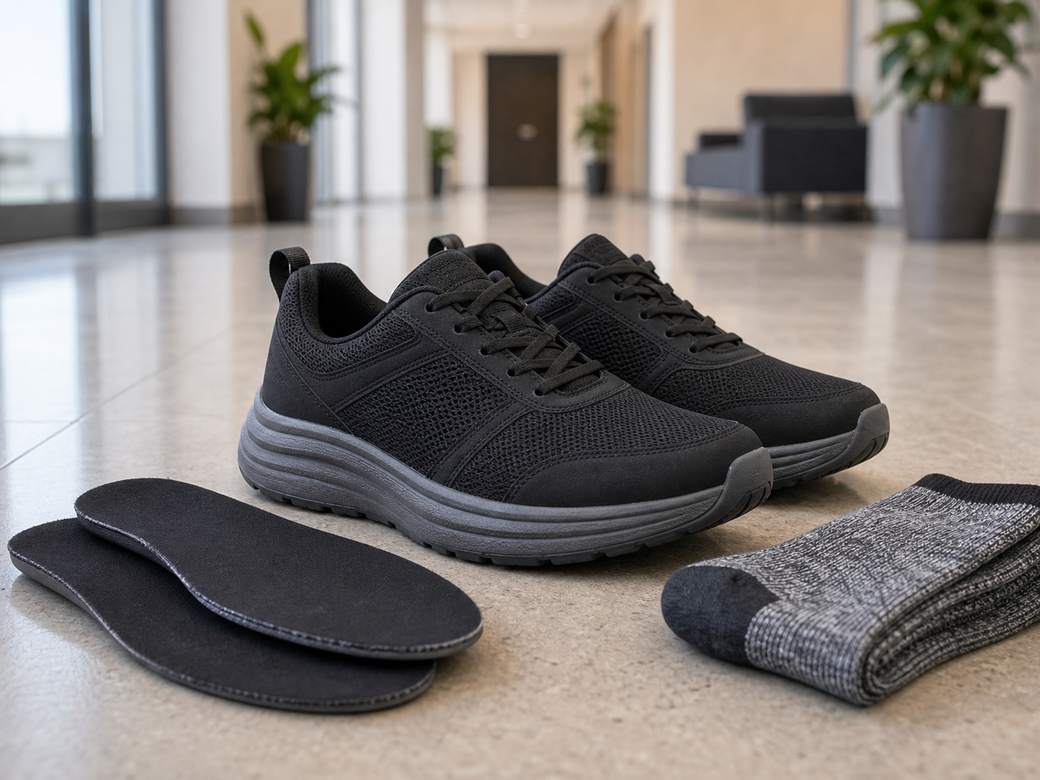
4. HOKA Bondi 9 Wide
Best plush pavement comparison.
The Bondi 9 is HOKA’s current ultra-cushioned everyday model and the official product family identifies walking use. The wide configuration is the relevant version here; HOKA describes supercritical EVA, a smooth MetaRocker and a Durabrasion rubber outsole.
Who should buy it: Buy it if hard pavement and long walks make cushioning the priority. Skip it if tall midsoles feel wobbly on curbs or slopes, and verify the exact US width configuration before checkout.
5. ASICS GEL-NIMBUS 28 WIDE
Best current asics wide max-cushion comparison.
The current GEL-NIMBUS 28 WIDE page identifies maximum cushioning, neutral support, an 8 mm drop, FF BLAST PLUS foam, PureGEL technology and an engineered knit upper. It is a clear pavement-walking crossover for shoppers who want a specific ASICS wide model.
Who should buy it: Buy it if a wide neutral max-cushion trainer feels stable at walking pace. Skip it if you need a firmer platform, motion-control guidance or an extra-wide configuration not shown on the exact page you select.
6. Orthofeet Edgewater
Best men’s option through 6e.
The current men’s Edgewater page lists medium D, wide 2E, extra-wide 4E and extra-extra-wide 6E. Orthofeet also identifies a stretch upper, extra depth, included spacers and an adjustable arch booster. Those are fit tools, not a promise to treat pain or a medical condition.
Who should buy it: Buy it if you need a men’s walking shoe beyond 4E or extra interior depth. Skip it if you want a lighter performance trainer, and seek qualified care for persistent pain, numbness, wounds or injury.
How to Choose Walking Shoes for Wide Feet
Start with the kind of width problem you actually have. Some people need more toe-box width. Some need more midfoot volume. Some have a high instep. Some get swelling after hours on their feet. Some need room for orthotics. The right shoe depends on which of those problems you are solving.
Do not rely on sizing up alone. Going up a half size can help if your toes hit the front, but it does not always make the shoe meaningfully wider. If the forefoot still squeezes and the heel starts slipping, you need a different width, last shape, or model.
Check heel hold carefully. Wide-foot shoppers often accept heel slip because the front finally feels comfortable. That tradeoff can cause rubbing, instability, and tired feet. A good wide walking shoe gives the toes room while keeping the heel and midfoot secure.
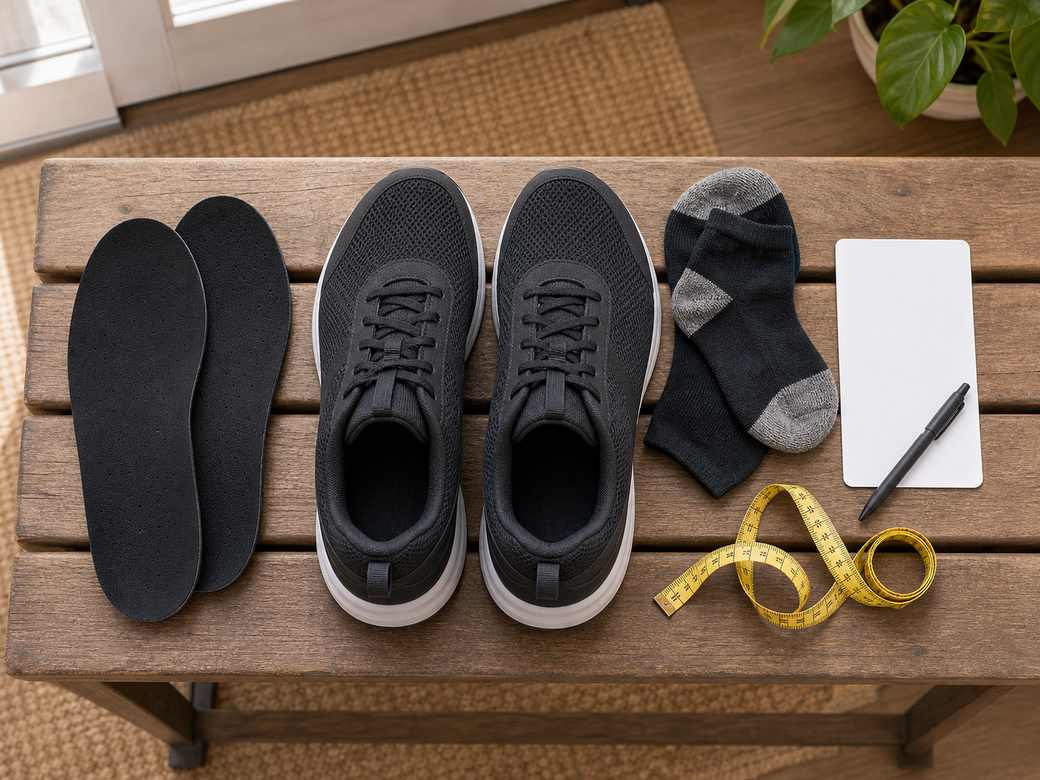
Test with real conditions. Try the shoe later in the day, with your normal socks, and with your insoles or orthotics if you use them. Walk on hard floor, climb stairs, turn around, and stand for several minutes. If the upper presses across the top of the foot or your foot spills over the platform, keep looking.
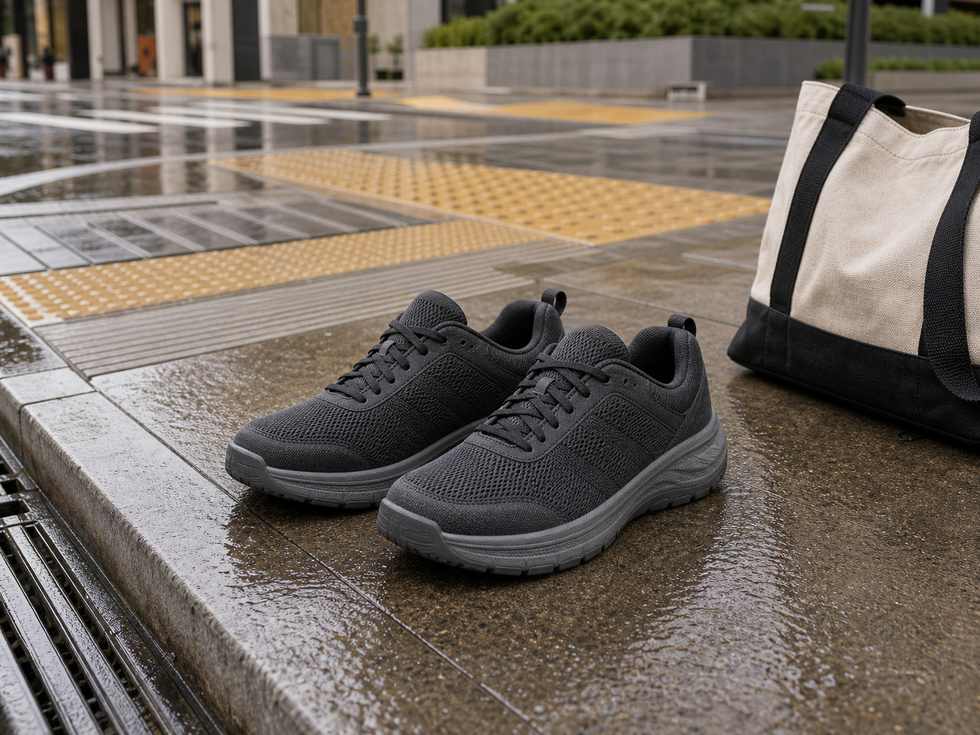
Wide vs Extra Wide
Wide and extra wide are not standardized perfectly across brands. In many US shoe lines, wide may be labeled D for women or 2E for men, while extra wide may be labeled 2E for women or 4E for men, but brands vary. The label is only a starting point. The actual shoe shape, upper stretch, insole volume, and heel design all matter.
If wide feels close but not enough, try extra wide instead of adding length. If extra wide feels roomy but sloppy, try a different brand or a shoe with better heel hold. If one foot is wider than the other, fit the larger or more sensitive foot and use lacing or insoles to fine-tune the other side.
What to Avoid
- Buying a longer shoe when the real issue is width.
- Accepting heel slip just because the toe box finally feels roomy.
- Choosing soft cushioning if the platform lets your foot roll over the side.
- Assuming every wide model from the same brand fits the same way.
- Keeping shoes that create pressure across the top of the foot during a short try-on.
- Ignoring return policy when buying wide or extra-wide shoes online.
- Treating shoe recommendations as medical advice for persistent pain, numbness, diabetes-related foot concerns, or recent injury.
Related Guides
For the broader category, start with best walking shoes and the walking shoes hub. If your walks are mainly travel days, read best walking shoes for travel. For work shifts and hard floors, see best shoes for standing all day. If you run as well as walk, compare best running shoes for wide feet.
Sources Checked
Manufacturer sources rechecked August 23, 2026: New Balance 1080v15, Brooks Ghost Max 4, Skechers GO WALK Arch Fit 2.0 Cassy, HOKA Bondi 9, ASICS GEL-NIMBUS 28 WIDE, and Orthofeet Edgewater. Widths, colors, release status and availability can change; verify the exact gender, size and color page before buying.
FAQ
What walking shoes are best for wide feet?
The best walking shoes for wide feet offer real width options, enough toe-box room, secure heel hold, removable insoles when needed, and stable cushioning for long walks. Current exact comparisons in this guide include the New Balance 1080v15, Brooks Ghost Max 4, Skechers GO WALK Arch Fit 2.0 Cassy, HOKA Bondi 9 Wide, ASICS GEL-NIMBUS 28 WIDE and Orthofeet Edgewater.
Should wide feet size up in walking shoes?
Not as the first fix. Sizing up can add length, but it does not always add the right width. If sizing up causes heel slip, choose a true wide or extra-wide option instead.
Are running shoes good walking shoes for wide feet?
Many wide running shoes work well for walking because they offer cushioning and width options. They should still feel stable at a walking pace and should not feel too tall, soft, or narrow through the midfoot.
How much toe room should wide walking shoes have?
Leave enough room for toes to relax and for normal swelling, but not so much length that the heel slips. Your toes should not press into the sidewalls or front of the shoe when you walk downhill or climb stairs.
What if one foot is wider than the other?
Fit the wider or more sensitive foot first, then adjust the other shoe with lacing, socks, or insoles if needed. If the difference is large or painful, consider professional fitting advice.
Final Recommendation
Start with the New Balance 1080v15 if you want four published width steps. Compare the Brooks Ghost Max 4 for a broad-base walking crossover, the women’s Skechers GO WALK Arch Fit 2.0 Cassy for a casual wide option, HOKA Bondi 9 Wide or ASICS GEL-NIMBUS 28 WIDE for plush pavement cushioning, and the men’s Orthofeet Edgewater when 6E or extra depth is the decisive filter.
Retailer note: Shoe Like is not showing live affiliate checkout links on this page yet. When affiliate links are added, each retailer URL should be verified and commercial links should use sponsored/nofollow handling.